Post-Tension Services
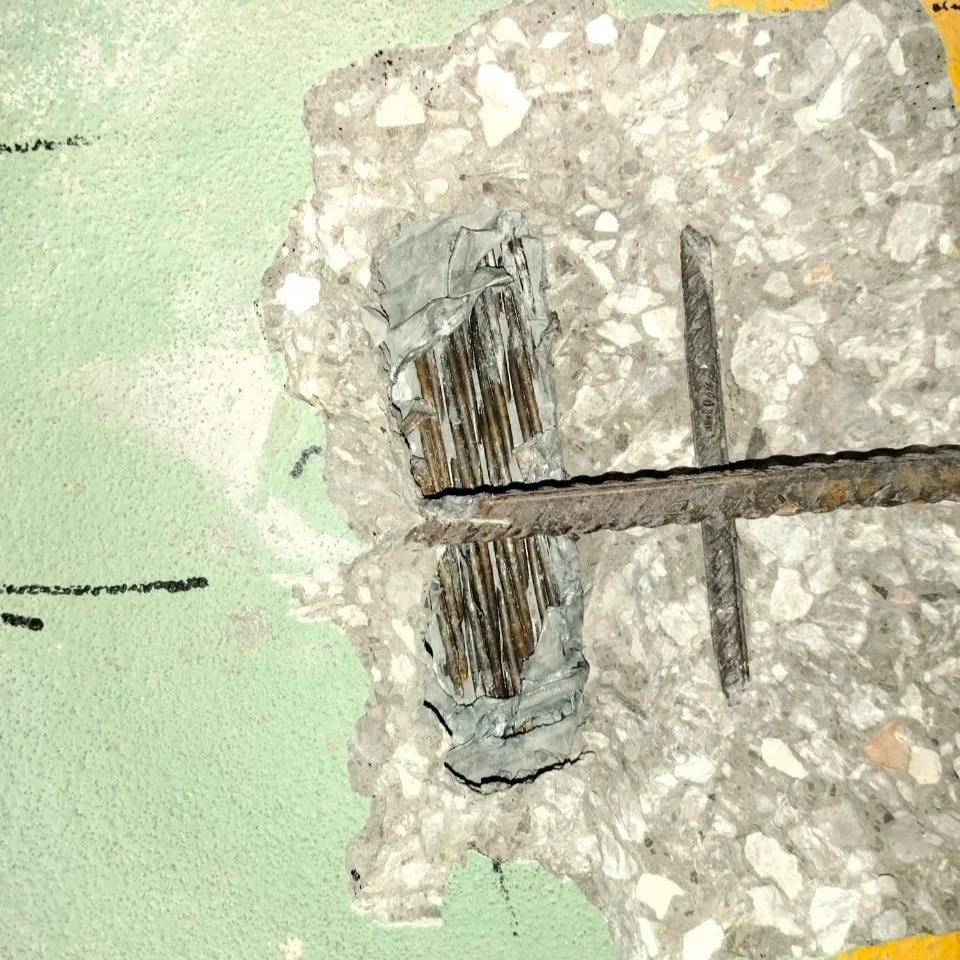
Prestressed and post-tensioned structures are vulnerable to issues such as poor grouting, moisture ingress, and chloride contamination.
These problems are often not visible during routine inspections and can progress undetected until significant damage has occurred.
We provide specialised inspection and evaluation services to assess the condition of post-tensioning (PT) systems. Using non-destructive testing and targeted investigation methods, we identify defects, evaluate corrosion risk, and support informed decisions on repair and mitigation.
Methods
Grout Void and Defect Identification
Inspection of Internal Post-Tensioned Tendons
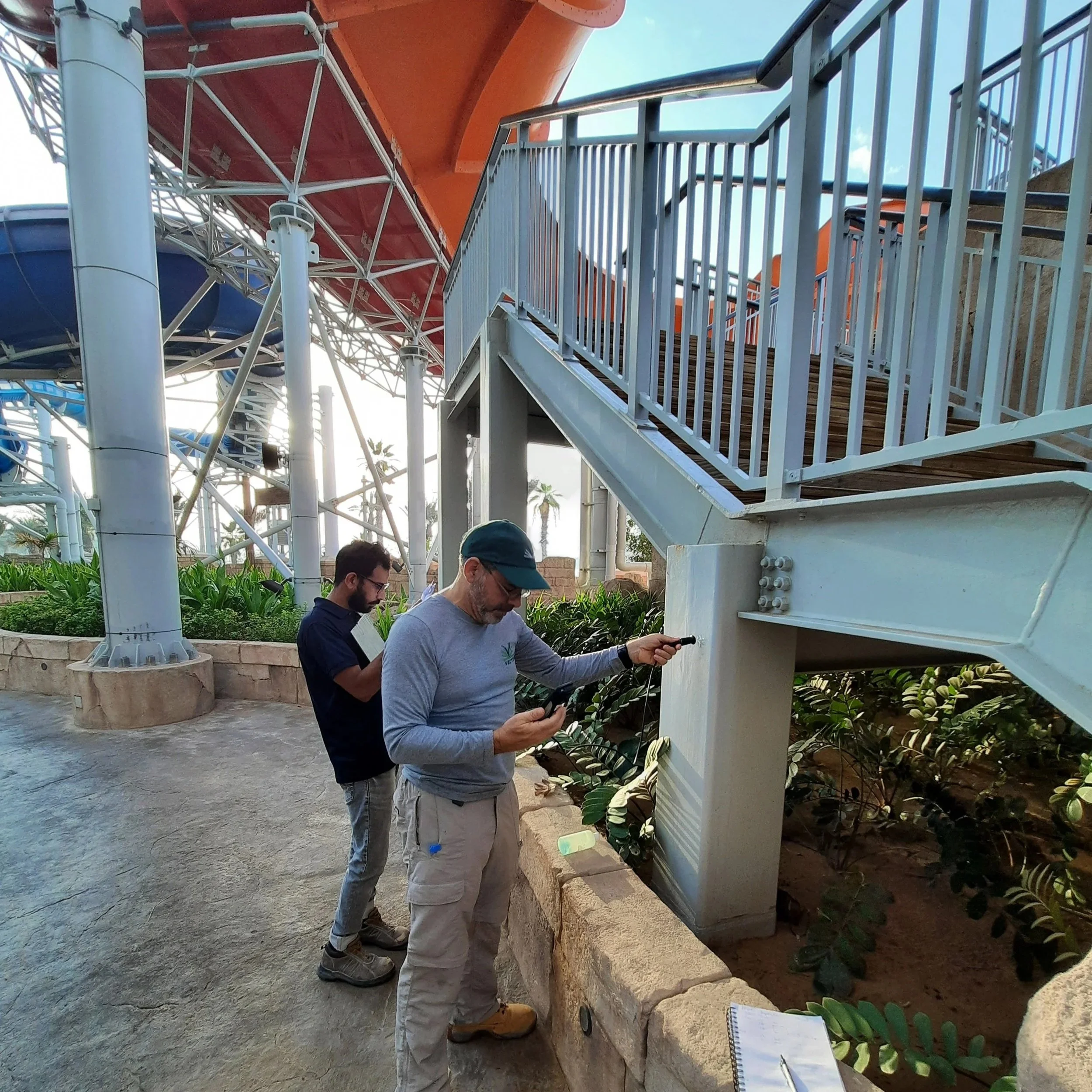
Our proprietary Impact Echo/Pulse Velocity (IE/PV) testing is used to assess internal PT tendons and identify grout defects such as voids or soft grout.
The method measures how stress waves travel through the concrete. Changes in the signal indicate areas where the tendon duct is not properly grouted. By scanning along the tendon, defective sections can be located.
Inspection of External Post-Tensioned Tendons
Pulse Velocity (PV) testing is used to assess external PT tendons and identify grout defects such as voids, water ingress, or soft grout.
The method transmits a signal through the tendon duct between a transmitter and receiver. Changes in the signal indicate areas where the duct is not properly grouted. By scanning along the tendon, defective sections can be located.
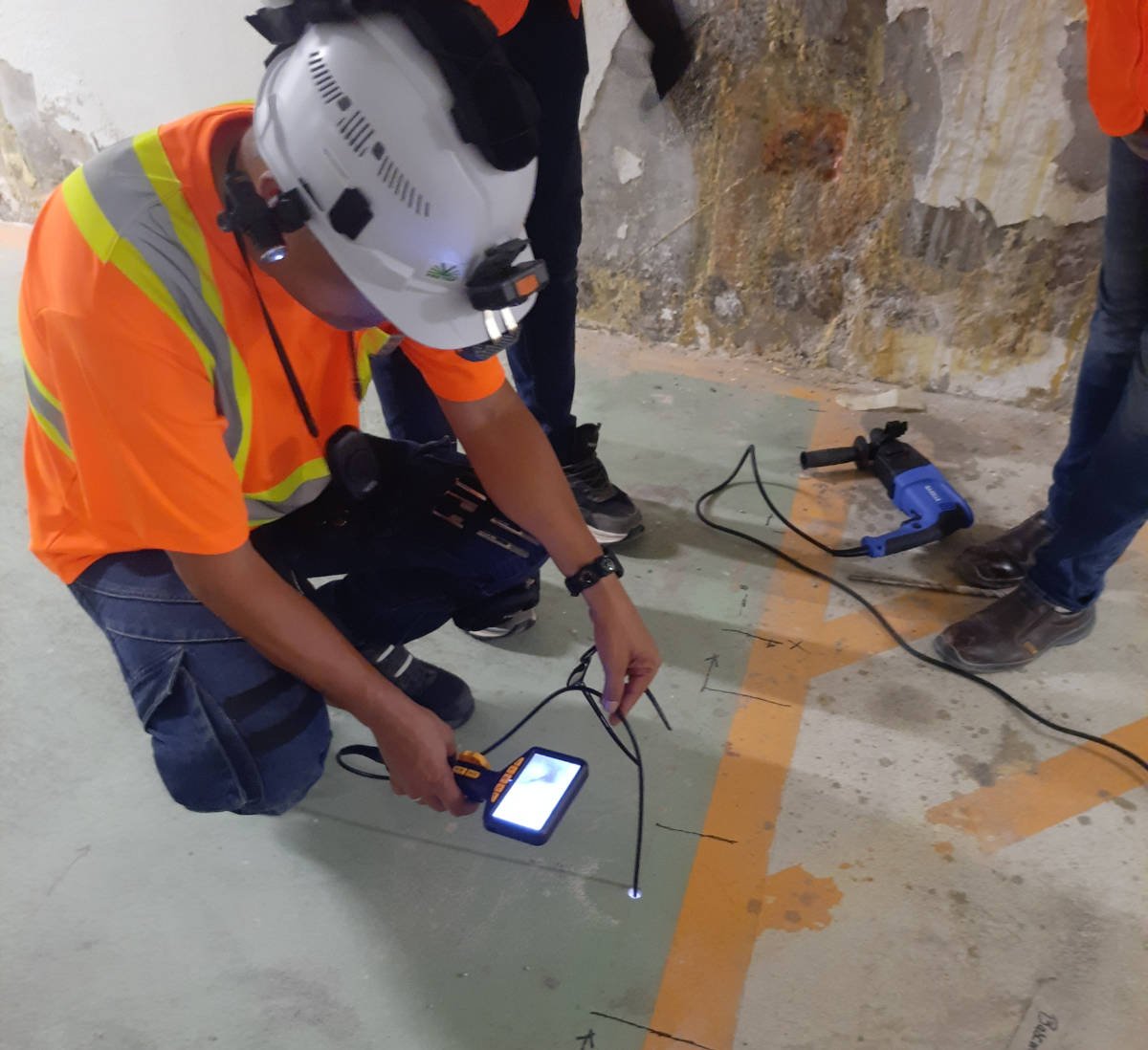
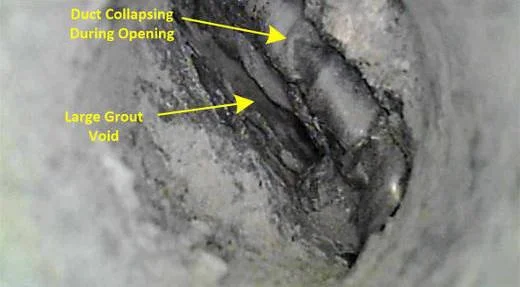
Borescope inspection
A small camera is inserted through access openings to visually inspect accessible areas within post-tensioned tendon ducts and anchorages.
The inspection helps identify grout voids, moisture, and visible signs of corrosion or deterioration, supporting tendon condition assessment and targeted repair planning..
Corrosion Assessment of Post-Tensioned (Moisture Testing)
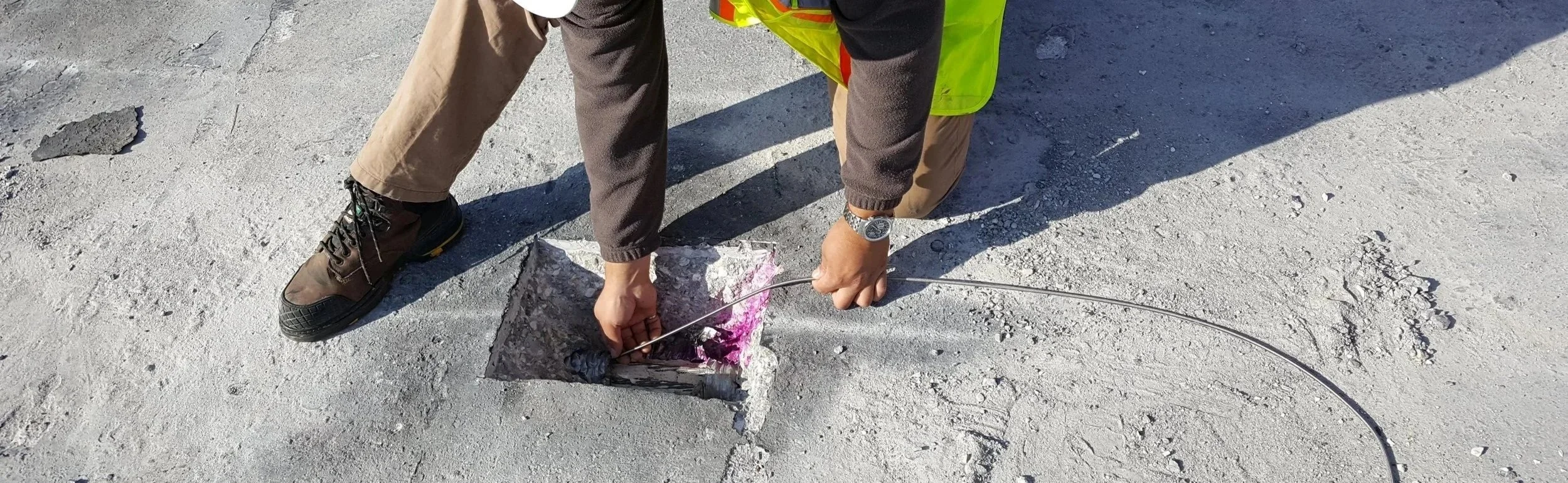
Corrosion risk is assessed using the Post-Tech Corrosion Evaluation (PTCE) method, which is also referred to as moisture testing.
This approach measures moisture conditions within the tendon by injecting dry gas at an IN port and monitoring moisture content at a distant OUT port. The change in moisture content is used to evaluate the internal environment of the tendon and the likelihood of corrosion.
This provides a practical assessment of corrosion risk in tendons that cannot be accessed or inspected using other methods like corrosion potential testing.
Acoustic Inspection Methods
Acoustic evaluation of concrete pipe is performed using Impact Echo and Pulse Velocity (IE/PV) testing.
These methods measure how waves travel through the concrete to assess its condition and identify areas of reduced wall thickness or loss of prestressing along the pipeline.
This testing helps owners manage their assets and prevent costly failures.
Explore Our Post-Tension Project Experience!